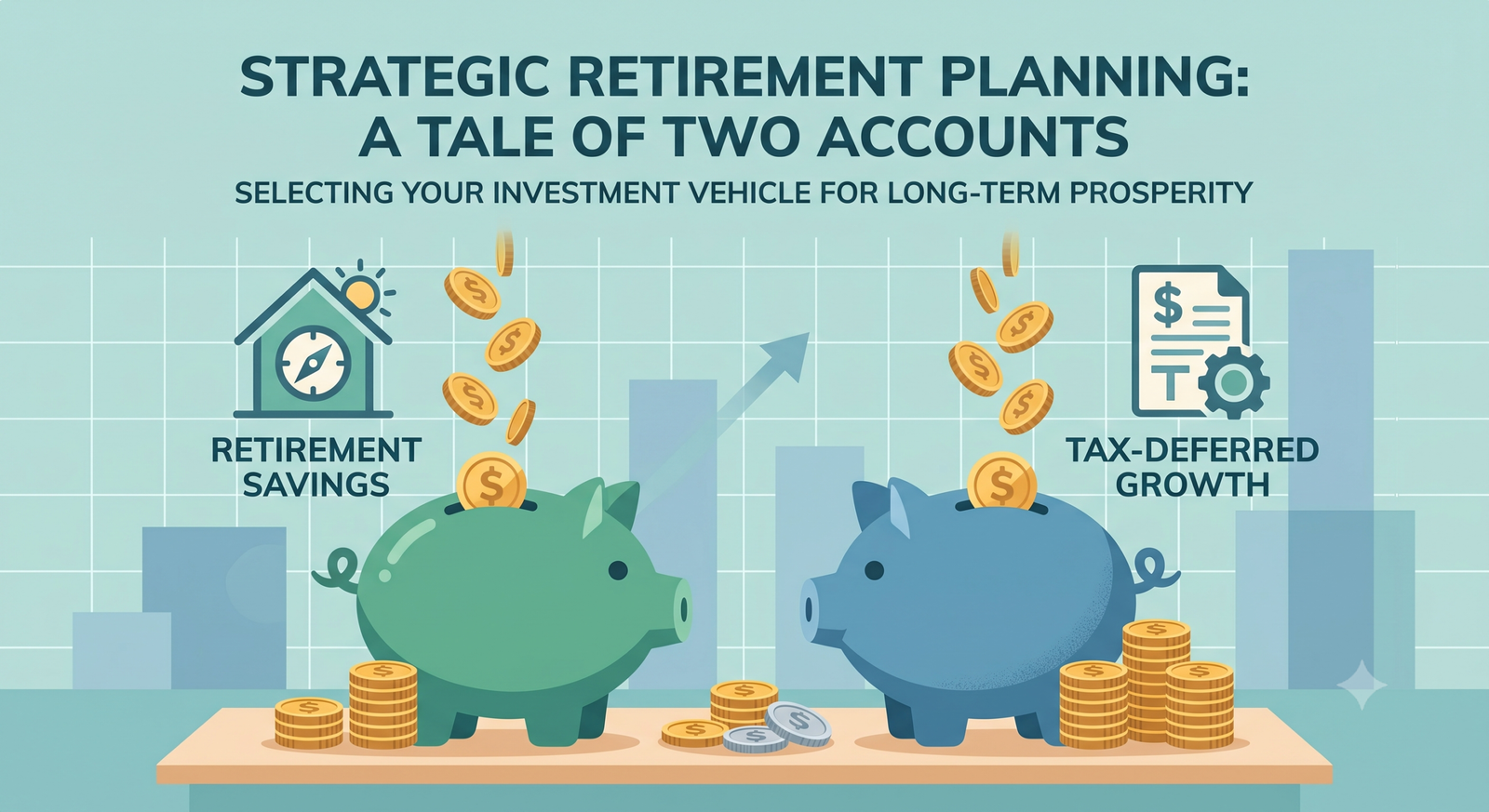
Choosing between a Roth IRA and a 401(k) is one of the most common retirement planning questions, and the right answer depends on your income, employer benefits, and long-term tax strategy. This guide breaks down the key differences so you can decide which account, or combination of accounts, fits your financial goals.
What Is a 401(k)?
A 401(k) is an employer-sponsored retirement account that allows you to contribute a portion of your paycheck before taxes are taken out. Many employers also offer a matching contribution, effectively giving you free money toward retirement, up to a certain percentage of your salary.
What Is a Roth IRA?
A Roth IRA is an individual retirement account funded with after-tax dollars. Because taxes are paid upfront, qualified withdrawals in retirement, including all investment growth, are completely tax-free. Roth IRAs are opened independently rather than through an employer.
Key Differences Between Roth IRA and 401(k)
Tax Treatment
401(k) contributions reduce your taxable income now, but withdrawals in retirement are taxed as ordinary income. Roth IRA contributions offer no upfront tax break, but withdrawals in retirement are entirely tax-free, which can be especially valuable if you expect to be in a higher tax bracket later in life.
Contribution Limits
401(k) plans generally allow significantly higher annual contribution limits compared to Roth IRAs, making them useful for investors who want to save more aggressively for retirement.
Employer Match
A major advantage of 401(k) plans is the potential employer match, which Roth IRAs do not offer since they are not tied to an employer. Financial advisors commonly recommend contributing enough to a 401(k) to capture the full employer match before directing additional savings elsewhere.
📷 Sub-Image Prompt: Comparison table style illustration showing 401k and Roth IRA features side by side with simple checkmark and tax icons, clean infographic design
Which One Should You Choose?
- If your employer offers a 401(k) match, contribute enough to get the full match first.
- If you expect to be in a higher tax bracket in retirement, a Roth IRA’s tax-free withdrawals may be more valuable.
- If you want higher contribution limits, a 401(k) allows you to save more each year.
- If you value more investment flexibility, a Roth IRA typically offers a wider range of investment choices than an employer 401(k) plan.
Can You Have Both?
Yes. Many investors use both accounts together: contributing to a 401(k) up to the employer match, then maxing out a Roth IRA for tax diversification, and returning to the 401(k) for any additional retirement savings. This strategy provides flexibility in retirement, since you can choose which account to withdraw from based on your tax situation each year.
📷 Sub-Image Prompt: Illustration of a retirement savings timeline from age 25 to 65 showing contributions growing steadily, clean flat design with a rising path
Final Thoughts
Both Roth IRAs and 401(k)s offer powerful ways to build long-term retirement savings, and choosing between them, or using both, comes down to your current tax situation, employer benefits, and future income expectations. Starting early and contributing consistently matters more than picking the perfect account from day one.